
A Pilgrimage Beneath Pink Trees
It all begins with an idea.
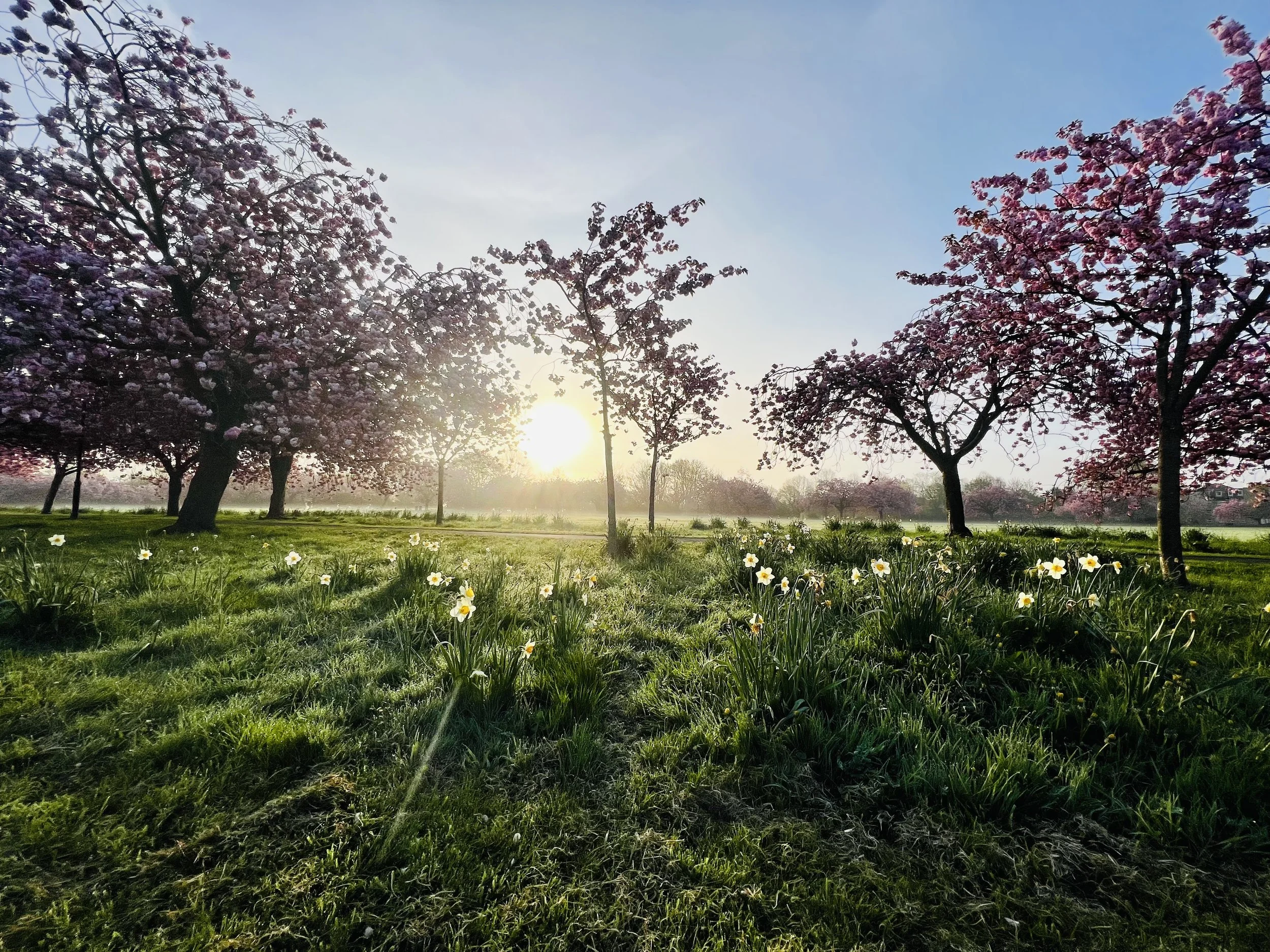
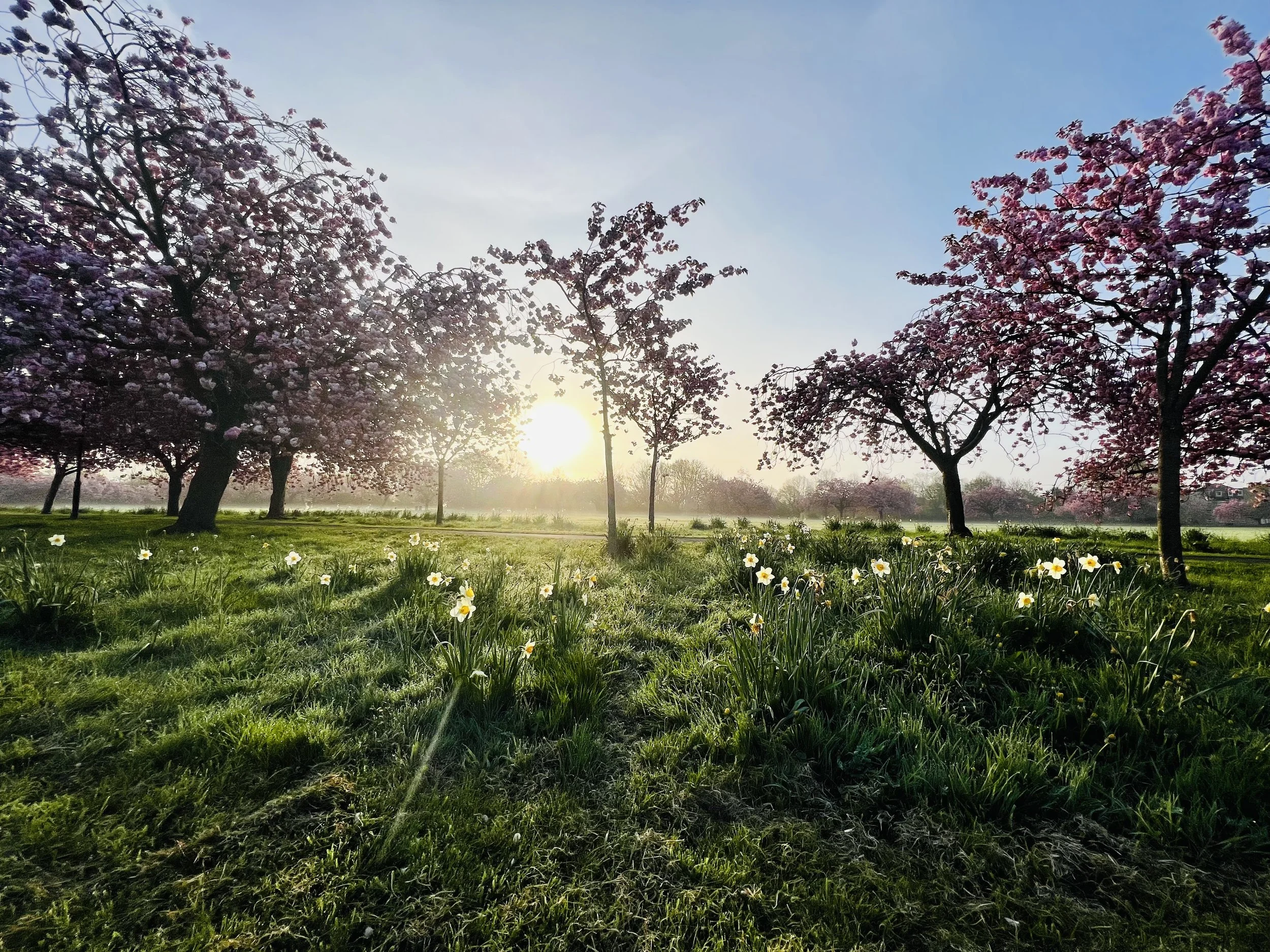
Evanescent as a sunrise and whimsical as a fairy tale, they don’t simply bloom—they arrive. Each spring, I feel a delicious luck that we are here, sakura and I, on Harrogate’s Stray. English mist clings to their delicate petals, seeping through my shoes in the morning’s hush. The cherry trees stretch upward, radiant with the confidence of an adored celebrity. By afternoon, crowds flock from nearby towns, cameras at the ready, blankets strewn across drying grass for picnics, games, or quiet reading. To stand beneath their branches is something like brushing against a spell or a shooting star. They are magic.
And then they are gone.
In Japan, they are sakura, and people gather for hanami—flower viewing. More than trees, they are a philosophy, a celebration of the ephemeral, a reminder to cherish what blooms in its season. And much like an aurora or a lantern-lit deep-sea fish, sakura lift the ordinary’s veil, revealing what might be possible. Yet, even as I see them, their impossibility dazzles.
Beneath these pink canopies, I hold my own quiet hanami, and it becomes an inward pilgrimage. At 48, an expat Floridian in my seventh English year, I stand at a crossroads. My children, once my compass, now chase their own enchanted dreams—two at university, one lingering in the nest, his high school years waning.
The house grows more still, but loud with questions:
What am I?
Who am I?
What do I love?
What should I do?
These questions run roughshod through me now. Some days, a melancholy; others, a panic. For twenty years, I answered them like a pull-string toy:
I am a mother.
I’m mom.
I love my family.
I care for them.
My purpose, neatly ordered, filled my days. But now, as the demands soften, those questions poke me in my chest, confrontational under these cherry blossoms.
I’ve never been to Japan, knowing it only through books, but its principles stir me: wabi-sabi’s embrace of imperfection, shibumi’s refined simplicity, and these days ikigai. In this season of emptier rooms and smaller suppers for fewer people, I am seeking my own ikigai—that sacred intersection of what I love, what I can do, what the world needs, and what sustains me. Months of reflection, weeks of honing with authenticity’s careful edge, and things shapeless ideas are coming into focus. As Shakespeare wrote, “The meaning of life is to find your gift. The purpose of life is to give it away.” My ikigai is both my gift and my offering.
It’s the novels I’ve loved over decades of reading and those I yearn to write for myself. It’s the places I’ve roamed, the stories I’ve carried back in rucksacks, and those yet to unfold. It’s the photos I’ve taken, and will take, the meals I’ve made and the few for which I’m small-town famous, the art I’ll create, the conversations I crave, the lessons I’ve learned, and all I still long to know. At 48, my pockets are both half full, half empty—heavy with what I’ve gathered, eager for what else I can stuff into them.
Packing up my children and watching them go is a lonely journey, but seeing them seek their ikigai is a lovely one. The light of their search, often spills across my own cheeks, because this bend in the road is ours together. A friend recently spoke of her cousin, in her thirties, reviving an old dream. “Sometimes we set our dreams down,” she said, “and then we pick them up again.”
So here I am, polishing old dreams, stuffing them in my pockets like a little girl hoarding gumballs. Dreams born as a Florida girl with a suntan and a Disney Pass, still pulse within me, on this North Sea island where the sun casts new, surprising light.
Sakura reminds me: chase it. While hunger burns in your soul, while passion bucks and grit clenches your jaw. Run for it, with a heart like a war drum in your ribs. Hanami. Find the flowers. Seek them out at all costs, before the fire in your mind outpaces the strength in your limbs, before you believe the lie of “someday.”
Do it while magic arches overhead.
In the quickest breath, the will petals drift, pooling in pink tides at our feet. Do everything you can to see them before the fall.
The Rest of Everything
It all begins with an idea.
It was not the most pleasant walk into town; that relentless grey sheet of a sky still pasted overhead. Winter begins to feel like a rude guest toward the end. You can’t wait for it to leave.
A cluster of mistakes and mishaps (don’t ask) required that I carry myself into town on my own two sticks and I did so with a bitterness for that ugly sky, and maybe even myself, whom I am finding so annoying to be, these days. Middle age is frustrating. It pulls in two distinctly opposite directions: constantly urging you to be younger, healthier, and more energetic while simultaneously undermining that effort at every turn. In the center of me is a great discomfort: a pulling apart of two important halves. I was feeling contemplative over it, my shoes smacking against the wet sidewalk, the cold air pinching my cheeks. I was chastising myself for my perimenopausal forgetfulness—the reason I was making the trip to begin with—and taking a note in my phone to remember: “look up a vitamin for remembering things.” Putting my phone away, I glanced down and saw them.
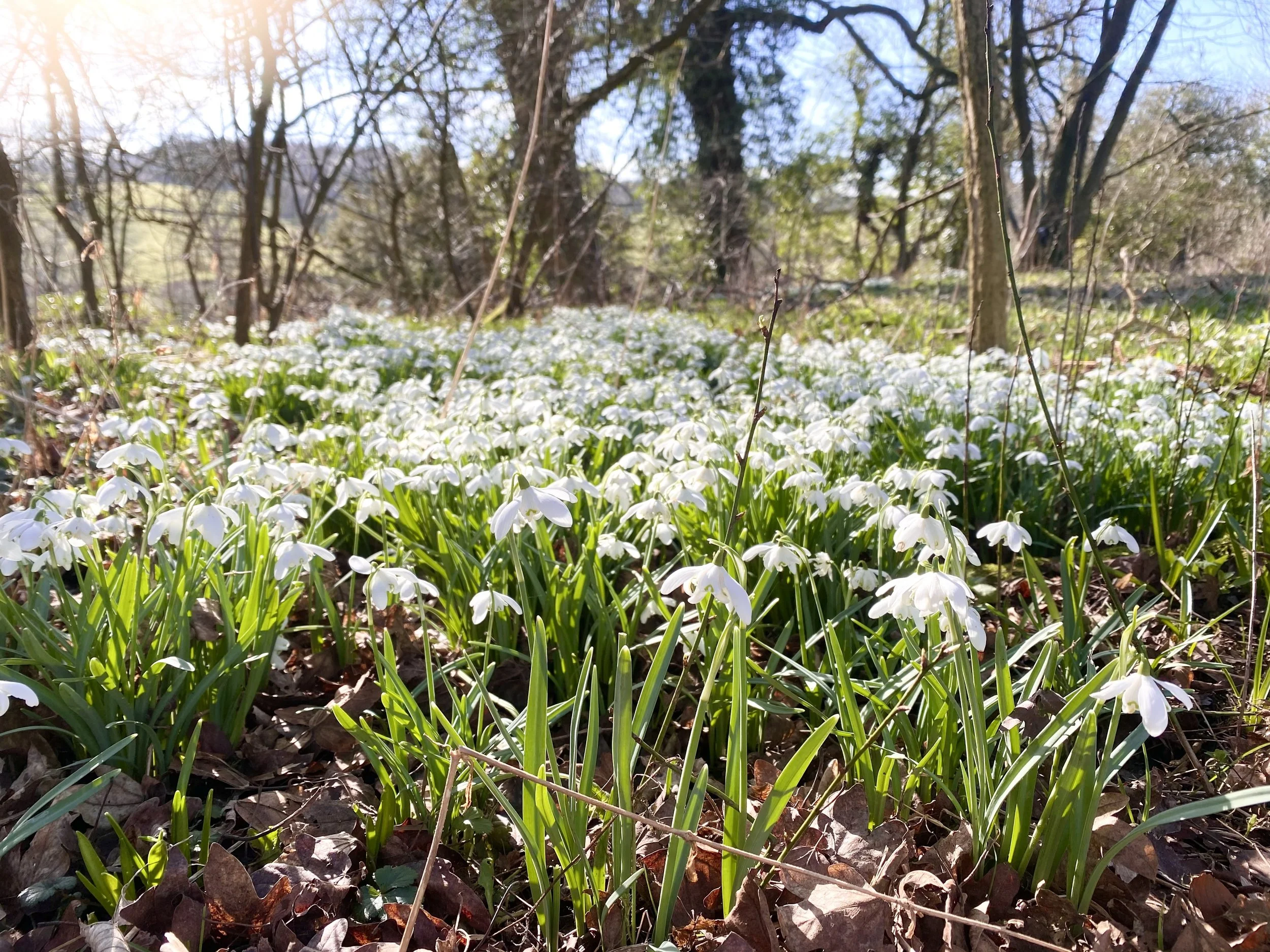
Snowdrops.
The first winter after I moved to England, I wandered into Catherine’s, a chic ladies vintage shop I had quickly come to love. I was admiring a stack of leather gloves when Catherine, herself, approached me eager to share interesting details of how she sourced her treasures. When I spoke in return, the conversation immediately shifted, as it always does.
“Your accent! Where are you from in America?”
“Florida,” I said, and then waited for the predictable reply, delivered right on cue.
“You traded Florida for this weather?” She asked. It’s a fact that genuinely surprised literally everyone.
“I do think I’ll enjoy having seasons, but yes. The winter is feeling a bit long.” I smiled.
She asked if I’d noticed the snowdrops “ … the small grassy bunches with the flowering white bells?”
I had seen them, I just didn’t know what they were.
“First you see the snowdrops, then the crocus, then the daffodils, and then the rest of everything. This is the march into Spring, which is well worth the wait. You’ll see.”
For as long as I can remember, I have made a habit of collecting phrases and saving them for a rainy day, and that felt like one needing saving, so I put it in my proverbial pocket. And today, seven years later, I took it out and let it work its magic.
Snowdrops, simple and elegant, are the first subtle glimpse of something dormant waking up. This is where I find myself now, in a profound Snowdrop Season in my life. After spending twenty years as a stay at home mom, I am now tiptoeing into a new chapter where the kids are leaving home and I am left with a lot of free time; some fear that the best years are behind me and some uncertainty around dusty old ideas I stuffed in a cupboard while I lost myself in the pure joy of raising my children. I always imagined this would feel like the “old me” was being shot out of a canon, but instead it feels like that first yawn into a new day, while old dreams are coming into focus and new ideas are taking shape. I’m a bit groggy, like waking up from a long sleep in unfamiliar light, and I feel unfamiliar too. Of course the year is still early: the sky is still grey, and the air, still quite cold, presses against me. This is no grand “voila!” magic trick transformation.
But the snowdrops are blooming, promising crocus, then daffodils, and I am choosing to trust Catherine’s encouragement: that “the rest of everything” will reveal itself as I march alongside the thaw . Emerging from my own sort of winter, I am trusting it will be well worth the wait.
Here
It all begins with an idea.
It was the sunniest day in six months or more. An early gift on this island in the North Sea, usually blotted out by mizzle and various shades of gloom. But today, blue skies and a gleaming sun prevailed and previewed a glimpse of hopeful days ahead. I raced outside to lie in it like a hound dog.
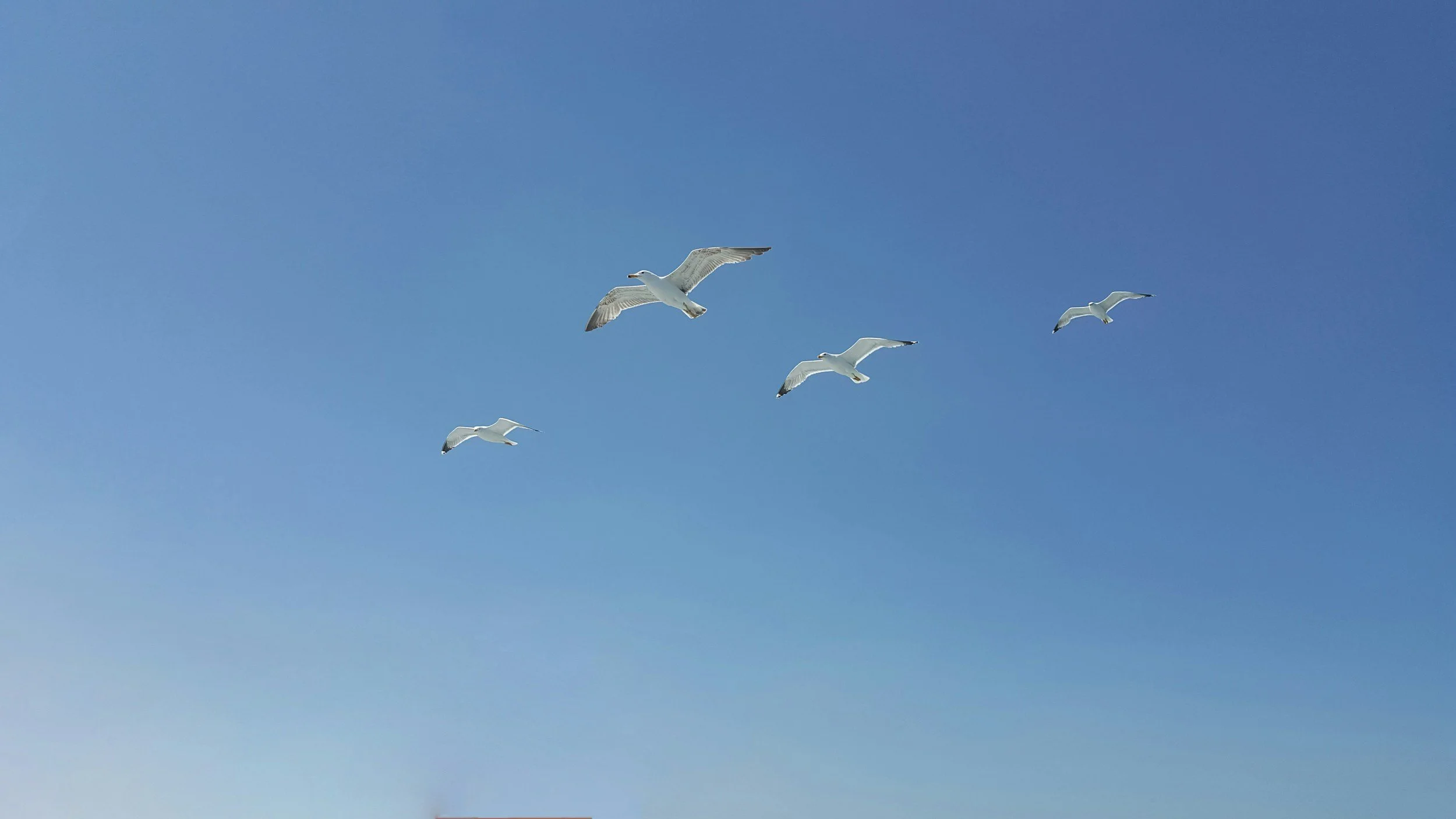
I closed my eyes and drifted in and out of consciousness. Seagulls screeched overhead, their cries poking holes in the sturdiness of where I was—it’s easy to forget this is an island. The sound nudged at something deep inside me—a Floridian echo of the sandy beaches and endless horizons of home. It’s been more than a year since I’ve seen the Gulf, but with my eyes closed the breeze and birds carried me close enough to imagine it.
I fell asleep and woke up at lunch time. (My appetite maintains a fastidious schedule.) Since it was the perfect kind of day for an easy sandwich, I grabbed a hunk of crusty bread, tore it apart and smeared the two halves with some on-hand butter, then stuffed it full of ham and a handful of cornichons from the fridge. It wasn’t quite the Frenchy-French jambon beurre you’d snag from a Parisian cafe, but it, too, was close enough.
Life as an expat can be a messy trade off. While there is always something new to love, there is always something to miss. And Florida sunshine for English drizzle, and palm trees for hedgerows, doesn’t always seem like a even swap. Life on this island can feel like a trap at times, the way the weather pins you indoors; I rarely visit the ocean despite its nearness.
But today I got close enough to something grand. A sunny patio, a knock off sandwich and a gull’s cry stitching me to the memories of places I love. It wasn’t the Gulf coast or a Parisian cafe but it was enough to make a for nice day and a solid reminder that we don’t need to drag our feet through something mediocre while we wait for something perfect. If we’re creative enough to see it and bold enough to seize it, near-perfect is exactly right here.